
From Static Slides to Meaningful Learning
Most pharmaceutical engagements start with a static patient profile — usually a few slides describing demographics, symptoms, and treatment options.
But reading a case is not the same as thinking through a patient.
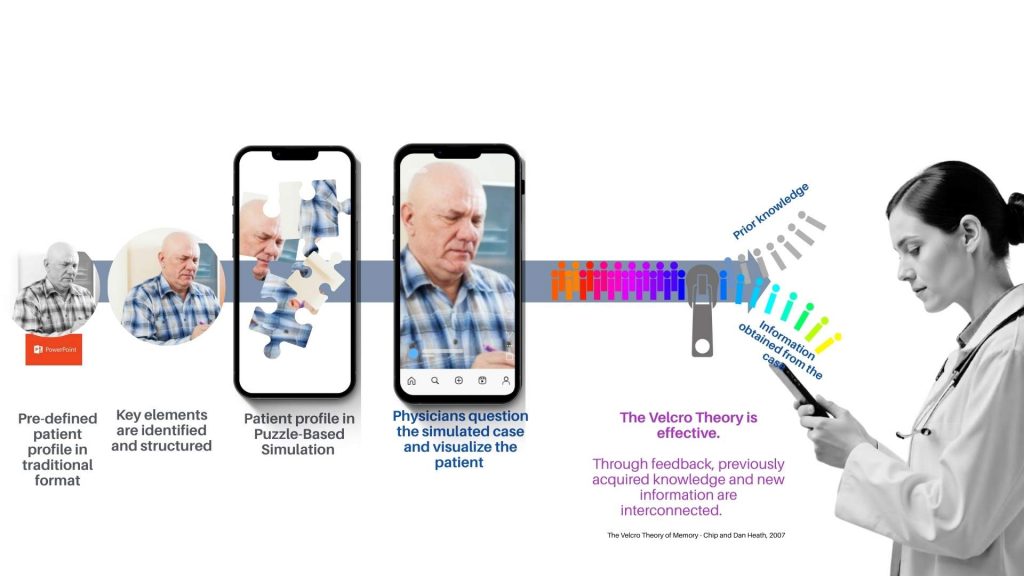
Casemice transforms traditional PPT-based patient profiles into interactive, puzzle-like clinical experiences.
How the Experience Is Built
-
Existing Patient Content
The journey starts with a predefined patient profile already available in presentation format. -
Clinical Prioritization
Key elements are identified and structured:-
Appropriate patient profiling
-
Treatment approach
-
Potential pitfalls and alternatives
-
-
Puzzle-Based Simulation Design
The patient case is reconstructed inside the simulation as a puzzle, encouraging curiosity and active exploration rather than passive review. -
Active Physician Engagement
As physicians question the case, they:-
Reconstruct the clinical picture step by step
-
Visualize the patient journey
-
Internalize the case more effectively
-
Why It Works: The Velcro Theory of Learning
Learning is strongest when new information attaches to existing knowledge.
By combining:
-
Prior clinical experience
-
Structured questioning
-
Immediate feedback
Casemice enables new insights to “stick” — just like Velcro.
Reflection and feedback reinforce learning by connecting what physicians already know with what they have just discovered.
From Engagement to Insight
Every interaction is:
-
Anonymous
-
Structured
-
Ready for analysis
This allows you to:
-
Understand how physicians actually reason
-
Identify knowledge gaps and decision patterns
-
Deliver meaningful, data-driven feedback
Designed for Real-World Medical Engagement
Casemice turns:
-
Presentations into experiences
-
Content into interaction
-
Communication into clinical insight
Because meaningful physician engagement starts with how doctors think — not what they are shown.